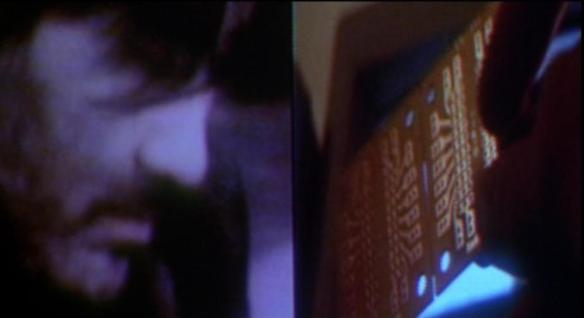
Ink is a 2009 indie film; written, directed, executive produced, composed, and edited by Jamin Winans. It’s billed as “a Wonderful Life meets Sin City” and a “high-concept visual thriller”, and is a passion project that tells a story about a mysterious creature called Ink, two mysterious forces battling for the fate of a girl, and the redemption of an ill-fated father. This $250,000 budget film has managed to gain 86 ten-star reviews on IMDB.com since its release, and for the life of me I can’t work out why, because it’s pompous, dull, and irredeemable Trash. I appreciate that it’s harsh to cut straight to the final score, but given how bloated and overlong the film was, I felt I had to restore some kind of cosmic balance. Maybe if you value the ratings given out here then the time saved not reading the rest of the review could make up for the time wasted watching the film. If not, here’s some nice things before the meat of its problems.
Continue reading
The Routledge Companion to Cyberpunk Culture (2019) is an expensive must have

I got my copy of this mighty tome back in July 2020, and that it’s taken me this long to feel I can finally give a solid review of its 430 pages, is testimony to how detailed and in-depth it is. Within the 50 information-rich articles is not so much an introduction to Cyberpunk, but more a state-of-the-art snapshot of some of the finest Cyberpunk Studies writing going around. Whilst the writing is not aggressively academic, the concepts and ideas discussed are given a weight and a reverence of serious critical analysis. The articles also demonstrate the most valuable facets of true fans of any genre: the joy of taking apart a favourite topic and evaluating it from every angle and in every light possible. Faults are on display as much as perfections, because it’s a part of the thing being loved, so needs to be part of a whole conversation.
Continue reading
Killers (1996)

It’s safe to say that Mike Mendez is not a household name when it comes to directors. Despite having had two films included in the Sundance Festival, 2000’s The Convent and this review’s 1996 Killers, he has significantly more credits as an editor for TV and documentaries. The only two films you are likely to have heard of by him are 2013’s Big Ass Spider!, because of that name, and 2016’s The Last Heist, because Henry Rollins is the bad guy in it. Killers, his first movie as director and writer, probably demonstrates both why he isn’t that well known and also why people keep on letting him make films.
Continue reading
Infestation (2009)

It’s always a gamble to seek out and watch movies that are on the margins of quality; they could have their middling, C-grade rating because the work doesn’t gel with that wide an audience, or because the makers were trying something new and exciting and just missed the mark. B+ rated movies are a known quantity, it’s most likely that they are going to be good at what they are doing from the offset, and any issues are just going to be personal preference. D- films are just punishment for punishments’ sake, something you watch for pure snark or irony. But the middle ground is when hitting “play” becomes an adventure in its own right; an exciting land where things can go either way…
Continue reading
Space Amoeba (1970)

The classic Japanese monster movie has a pretty set formula: monster exists, monster causes moderate levels of destruction in far off place, mankind looks at it and goes “Shiiitttt!”, the monster moves to a highly-populated area and causes massive amounts of damage, and mankind somehow pulls its arse out of the monster-induced fire. Whilst this is absolutely perfect plot progression, especially if it has municipal destruction that you can really see the behemoth emote through, sometimes you just want something different. Some kind of large-scale annihilation je ne sais pas to spice things up.
Continue reading
The 5 Uwe Boll Ball Movies Ranked

Before we start, two observations that apply to all of these films and need to be addressed.
Firstly, they all look very good. Both in terms of production values and how they are shot, all of the movies show a surprisingly high level of technical ability within the crew. The cast are, mostly, similarly talented. Whilst there are a couple of bad performances, most are quite good IF you ignore the material they have to deal with. These are multimillion-dollar productions, and they have the look and feel of multimillion-dollar productions that don’t sap your will to watch. As such, any and all criticism has to be placed directly at the feet of the director and producer, Uwe Boll, for the active decision to make such god-awful movies when they could so very easily have made perfectly okay ones.
Secondly, the sex scenes are atrocious. They are not sexy, most of them are not needed, there is next to no chemistry between anyone involved, and even the ones that you can just about accept as part of the plot are excessively long to the point of dullness. These films were obviously made with a predetermined boob quota and the assumption that showing a breast is, in and of itself, erotically charged. The most pointless was in Along In The Dark, as it could have been cut from the film and made zero impact on any of the story even though it involved two of the main characters. The most offensive was in BloodRayne 3; wherein the hero and unconscious heroine in a van taking them to a concentration camp, with zero romantic build-up, decide to have wild, freaky sex because he groped her whilst she was unconscious. Everything else is somewhere between those two points, and all are down to “artistic” decisions Uwe Boll made.
Continue reading
Exterminators Of The Year 3000 (1983)

It would be a lie to say this film was selected purely on its title. The cover and the trailer both suggested that there was a highly enjoyable Mad Max 2 rip-off to be experienced. The expectations were set to “all the violence, all the post-apocalyptic wasteland couture, but with none of the plot getting in the way”. When it became readily apparent that it was an English script performed by a mostly monolingual Italian cast the joy and hope that this was going to be cinematic mayhem, unfettered by any artistic responsibility, was just added to. With the bar set that low, how could we possibly be disappointed?
Continue reading
New Rose Hotel (1998)

This film is driven by the utterly devastating double act of Willem Dafoe as “X” and Christopher Walken as “Fox”, in what are their only co-starring roles on-screen (because otherwise, the world would collapse from the combined weight of their awesomeness). Both are involved in the seedy world of corporate espionage; Walken the work-orientated master and Dafoe the experienced but more money-focused journeyman. They have managed to get a job extracting Hiroshi, a highly valuable R&D scientist (played, mostly through video surveillance and sci-fi filters, by Yoshitaka Amano) from his current job to a new place of employment. To do this they have recruited Sandi (Asia Argento) to seduce him.
Continue reading
Cannibals and Carpet Fitters (2017)

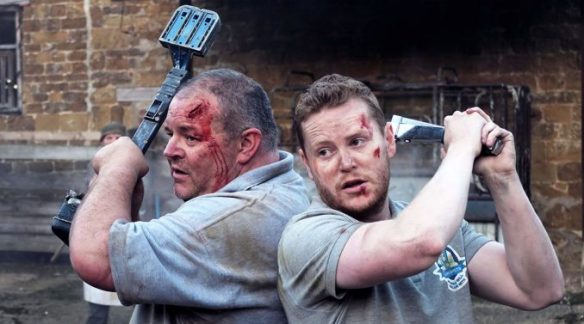
There is a long-standing tradition in folk-horror, all the way back to camp fire stories, of the weirdo family that lives in the middle of nowhere and eats anyone who inadvertently trespasses onto their hunting grounds. On an intellectual level it’s probably something to do with fear of the unknown and warnings against wandering too far away from the safety of the collective, but for B-movie fans it’s a very basic “hicks are inbred idiots” combined with the visceral thrill of transgressing one of the biggest cultural taboos. It’s morally reprehensible enough to make murder worse, it’s instinctively nauseating due to the fear of disease, and when done right it’s bloody funny.
Continue reading
X – The Unknown (1956)

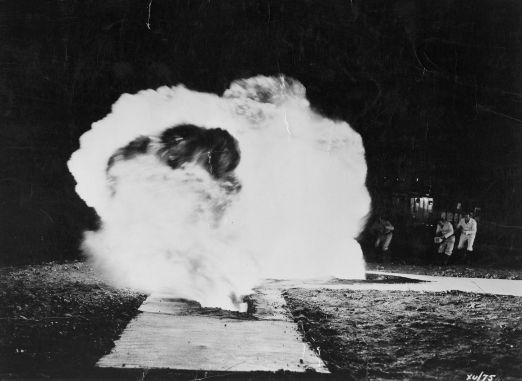
When Hammer Films decided to break away from the dramas and comedies that were the staples of their first twenty years of ripping off Ealing Studios, they did so with “The Quatermass Xperiment”; a remake of the 1953 BBC Television series written by Nigel Kneale. The studio was over the moon when it got an X rating for all it’s terror and tension, ensuring that everyone would want to see it and that the press would hate it. Combined with ground-breaking special effects, the cultural excitement of the then-not-even-named “Space Race”, and the marketing genius of putting it in cinemas the same weekend as when the BBCs Quatermass 2 series started, it was an amazing financial success. Thus, Hammer immediately started work on a follow up film, with only the slight snag of Nigel Kneale telling them they couldn’t use any of his work or characters because Hammer had changed so much with the first one.
Continue reading