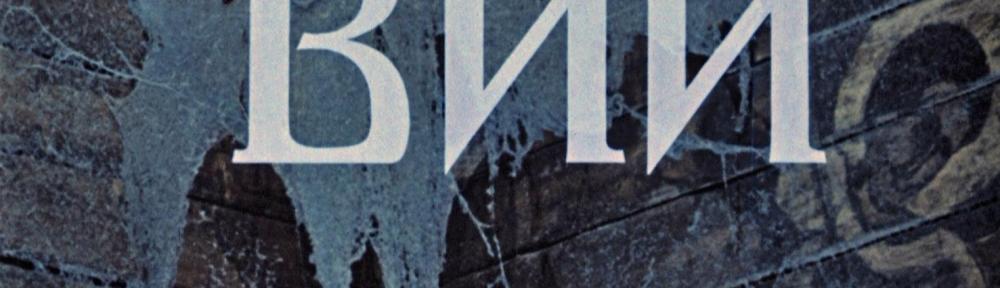
When someone introduces you to a film that holds the accolade of being the first horror film made by the USSR, it’s only polite to give it a watch with very open arms. It’s based on an 1835 story of the same name by Ukrainian author Nikolai Gogol, and I’ve not seen any films from that region it makes it a double first for me, and that’s what this kind of film blog is all about.
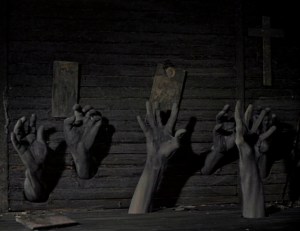
Hands up whoever wants quality entertainment!
The first act is a delightful blend of classic Hammer Horror and Jim Henson’s The Storyteller: rural, endlessly creepy, and every frame looking like an 1800s picture postcard. In it, we get introduced to Khoma Brutus (Leonid Kuravlyov), a priest in training who, like his comrades at the seminary, has been let loose for the holidays to rampage through the countryside committing minor acts of theft, vandalism and molestation. Not sure if that’s communist propaganda or historically accurate, but it firmly establishes him as a bit of a shit rather than a devout man of the cloth.
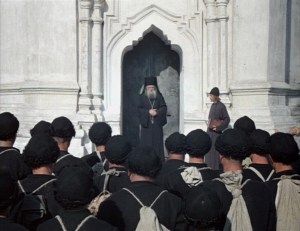
“On your marks. Get set. Pilage!”
He then meets a witch, played by Nikolay Kutuzov and Natalya Varley, who recognises his shittery and their paths get dramatically and surprisingly comedically interwoven. This is folk horror as a morality tale, and the humour comes from the foibles of mankind, the inevitability of evil spirits coming forth if you do blindingly dumb things, and an outright playfulness in the directorial style.
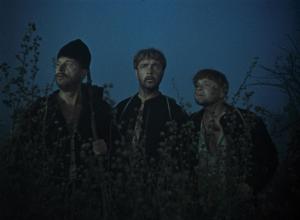
“I can see my house from here!”
The final section is an exciting dose of dark fantasy, accomplishing more with its budget of 50000 Soviet Rubles and practical effects than some modern million-dollar CGI vehicles can hope for. The vividness and colourfulness of the designs, and the brazenness of holding the camera on the creatures with full lighting, keep you watching and enthralled like a demonic stage play. There is also more of the humour, with sufficient goodwill built up that you feel in on the joke.
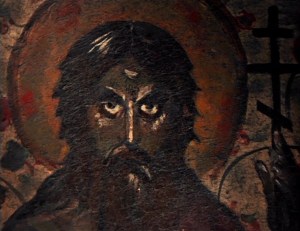
Also, a surprising number of really judgemental Jesus paintings.
At a brisk 78 minutes it never lags nor rushes, being happy to tell it’s story at the pace it needs to. The mood swings, the tones shift, and it feels like a cohesive narrative with real people all the way through. The sets and costumes help, giving off an air of era authenticity, and the cast are universally committed to building a sense of real communities and relationships happening around the whirlwind phantasmagoria. Fans of modern horror might consider it a little basic, but there is plenty from Aleksandr Ptushko’s effects to enjoy if you are up for the ride.
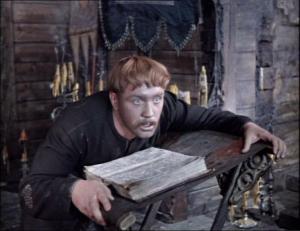
“I shouldn’t have done shots last night”
The only bits that seemed out of place were at the very start and the very end, but they are very brief and sufficiently tacked on to be read as requirements to get past the censors. Beyond that, if there was communist coding in the film I wasn’t aware of it and if it was there I never felt like it got in the way. Anyone expecting an overt political message should look elsewhere, as this is presented as and delivers on outright entertainment.
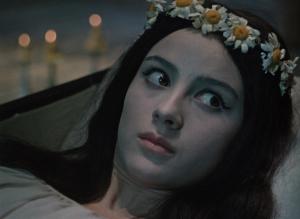
“Did I leave the gas on?”
Overall, it is a remarkably modern-feeling film with incredible nightmare scenes and a decent ending. It outshines many contemporaneous horrors from the USA and Europe, and quite a few contemporary filmmakers could take lessons from it. It’s also something the whole family could watch, even if the more sensitive adults end up hiding behind their cushions, which is useful around Halloween time. It effortlessly floats in to being a Treasure, and I can only encourage everyone to give it a try.
The Raggedyman

