
The Eighties; a period defined by the birth of the blockbuster, a wave of colourful and creative developments in pop music, and the ongoing fear of global annihilation from thermonuclear warfare. Thus it was that national TV services over the globe, starting with The Day After in 1983, decided they could crank out Premium Water Cooler TV by showing everyone how nukes could really mess up your day in one landed in your backyard. So obviously the BBC had to have a crack at it, in an incredibly British way…
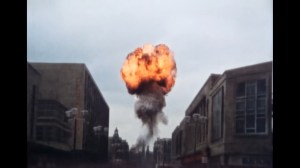
Spoiler Warning – a lot of things get wrecked.
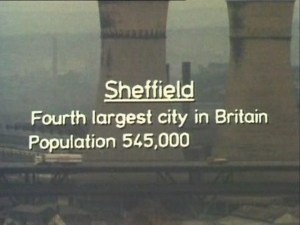
You know everyone’s safe when a film starts like this.
So we are clear, I’m not going to dispute the historical importance of this film. There are plenty of contemporary reports on how much it affected people, along with some ropey theories that then US President Ronald Reagan saw it and went “ooh, I didn’t know those things killed people!”, and it was indisputably a “groundbreaking drama”, meaning that the Thatcher Government thought only communists could have made it. As a historical text, it is invaluable, and thus a Treasure that I won’t knock on that front.
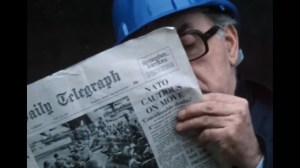
This, for 2 hours.
What I will take the piss out of is how it’s burrowed its way into being something that has “stood the test of time and “still carries an emotional punch”. Most of that comes from not many people watching it the first time it was broadcast and then the BBC only letting it back on the telly seven times since. It’s also considered by many to be unavailable on Home Media, mostly due to it never selling well whenever it’s released. In short, it’s lost media for those who can’t be arsed to go looking for it as that would ruin the story.

“If I heard that song one more bloody time…”
Things start well with The Dull Soap Opera section, as we follow Ruth and Jimmy dealing with the duel horrors of unplanned pregnancy and living in Sheffield. In the background, the threat of war mounts, but no one pays attention because this film is determined to make a point. At various stages, the miserably politics student cousin of The Book from Hitchhikers Guide To The Galaxy interjects interesting details about how everyone is going to die and no one knows what they are doing. This is the start of the film being unable to make it’s mind up if it’s a drama, a documentary, or a repeated attempt to smack you over the head about how war is bad.

Foreshadowing…
Later, much much later, after really making it clear that people won’t be arsed to look at all the newspaper headlines going “WAR!” people start to panic at the prospects of war. Otherwise sensible seeming people start doing stupid things, because the script told them to, and it’s all getting very serious. We get shown lots of people making or not making preparations for the conflict, mostly inspired by the Protect And Survive government pamphlet, and a lot of people who have no input in the decision argue about what Russia and America should or shouldn’t do. Thankfully, Johnny B Goode by Chuck Berry plays through all of this, as it’s the only bit of diegetic music in the whole thing. Either it’s some subtext based on a part of the Book of Revelations I don’t remember, or the sound engineers couldn’t be arsed to change the record during dubbing.

Then The Bomb Drops. The screen goes white, lots of people die, and everything gets destroyed. This is incredibly effective, simply shot, and utterly moving. It is devastation on a scale its hard to comprehend, so obviously it’s the right time for an art house sequence involving children’s toys and mist rather than just sticking to what we just saw. We then yo-yo back to a simply incredible sequence at a hospital, shot at head height with the steady cam fighting its way through the crowd, to keep the understandably terrified Ruth in the shot. It’s unrelenting, it’s terrifying, and it’s an incredible demonstration of how many people would be injured in such an attack and how no one will be able to help them. Find it on YouTube, it’s brilliant.

Chills, absoloute chills. There are moments of this which are pure gold.
Following that up is those who survived being miserable in a nuclear wasteland. It’s a savage, hostile, and understandably downbeat section which highlights the simple fact that those who live through the blast may not be the lucky ones. It’s also where we get the iconic image of the Traffic Warden as a prison guard, and you can start to feel the script gets a little imaginative as to how nuclear winter and the breakdown in government would be handled. Some science bits are also a bit ropey, but I’m not going to judge that because I’m quite confident that most of that was based on the best information available at the time.
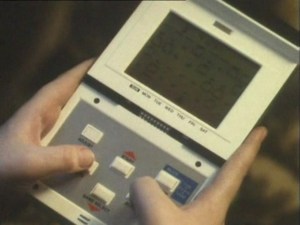
“Good news, you’ll still be able to play Tetris after the bomb drops”
Slowly but surely, things get out of hand as we move from solid science and reasonable prediction to just making stuff up. It’s Yorkshire Mad Max, complete with food riots, martial law, a descent into feudalism, and none of the “people helping people” that happens during real-life crises. Very tellingly, there is just enough government left for everyone to be treated badly and for Guardian readers to clutch their pearls about. When it’s ten years later and the English Language is some kind of lost magic, this must give up any claims of being fact-based as most people would know it.

“Did I leave the gas on?”
As said, this is a historically important film and was indisputably impactful for it’s time. However, in 1991 Terminator 2 managed to say the same thing with the playground scene in under 2 minutes, and that had both Arnie using a minigun and less frivolous speculation about what the future held for mankind. To the modern viewer, this is unsubtle, low-effort Event TV Trash. If you want a decent olde worlde nuclear horror docudrama then check out The War Game (1966), which was shelved by the BBC until 1985 because it is that damn good.

Raggedyman
 Trash or Treasure