
Time for a properly obscure bit of animation from director Robert Taylor ad the Hanna Barbera studio. There is a proper “production hell” story that accompanies this film, with it being finished in 1981 and then put on hold till a new section was added (by a different team) and it got it’s first screening in 1987. Never released for home viewing, and only broadcast a handful of times, if you want to watch it you’ll need to go to Archive.Org and forgive the quality/AV-Sync issues.
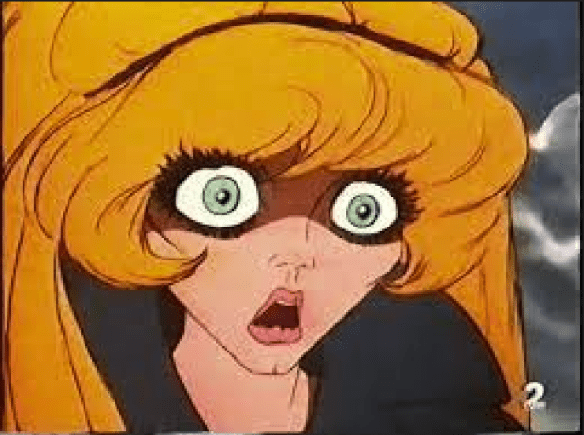
So much hair. Just way too much hair.
The main story is that of “Laura”, a mysterious avatar of feminine charms who seeks out her true love through the history of musical happenings and four potential suiters. The bold move was taken to have no dialogue (other than a talking jukebox voiced by Scarman Crothers, in their final film role) and use music from the four eras. Whilst all the tracks are bangers, they are also all covers (presumably for financial reasons) but they mostly hold up.
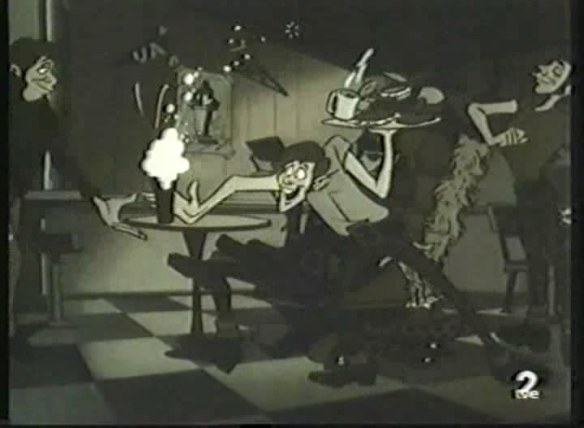
Rock & Roll & Cheeseburgers & Milkshakes, oh my!
The even bolder move taken by the film was to bombard the audience with a never-ending stream of creativity and visual opulence and have few recuring themes or motifs to anchor your understanding on. The film assumes that the audience are adults who can enjoy playful stream-of-consciousness and like to work out what is going on. This means that not only do you have to pay attention to get a fell for what’s happening, but there is also enough going on to keep you interested. And once you’ve watched it you can read the Wikipedia article to get the official version.

Space, the final frontier!
Given that the film is narrated by a talking record player, it’s not too surprising that there isn’t the greatest of historical accuracy or broad details about the music or events of “The 50s”, “The 60s”, “The 70s, or “The 80s”. The first two sections are the best executed, the third is the most confusing, and the final one really shows how much it was glued on after the original edit was handed in.
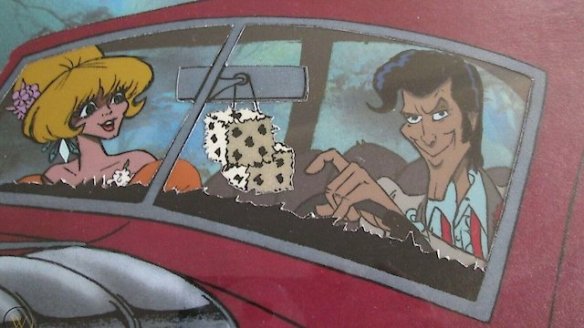
Like something out of the credit squence of Grease.
Things open with the 50s and probably the most consistent quality of music. It’s all rock-and-roll, bikers, brylcreem, fairgrounds, and lovers lanes. Very energetic, very innocent, and every inch the exemplar of how good Hanna-Barbera cartoons can get. Then, when you think it can’t get any better, a bunch of monsters crash the prom and it turns into an outlandish version of Fantasia.
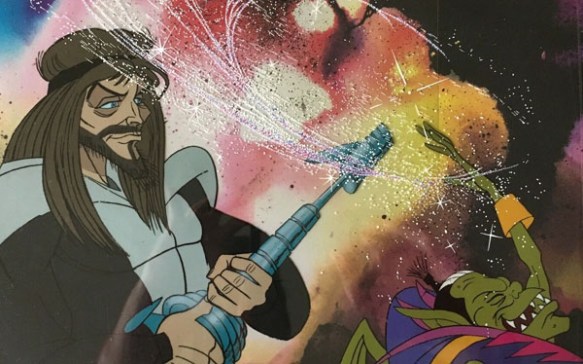
No, no clue what the heck is happening here.
From the carefree world of Happy Days, we end up in the 60s and it’s all about the Vietnam era. This has probably got the most terrifying imagery of the film, starting with police as the ’68 Democratic National Convention having police lights for heads as they baton-charge the crowd and ending with a the bad-acid trip of someone’s life being destroyed by The Draft. Even in the late 80s this would have to have been seen as incredibly politically charged, and the occult imagery adds an edge that was not expected. This could have been the easy highlight, but a few tepid tunes drag it to neck-and-neck with the 50s.

No one expects The Vietnam Inquisition!
By the 70s are apparently when everyone joined Greenpeace, so we end up in an anti-whaling ship in the ocean with a semi-sentient lobster and mild funk licks. Whilst less visually interesting it tries to be an emotional roller-coaster, with the end result partly succeeding. It’s hampered by being rather confusing in a distracting way, but is nowhere near as bad as The 80s which I just gave up on. The final section also includes a random selection of scenes from older cartoons, suggesting that they were trying to pad it out but didn’t want to spend any cash.

This is part of the same movie!
Due to the whole thing being 72 minutes and 26 pop songs long, none of the negatives are around long enough to actually be a problem. The pacing and liveliness is maintained throughout, and whilst dark topics are covered they never drag things down. The pure love for the music and willingness to experiment with the medium are constantly on display, and if you don’t like one bit it’ll be out of your face soon enough. It’s also not a Heavy Metal rip-off, with boobs and repetitive violence making up for a lack of plot; unlike a lot of the “adult” animations being made at the time.
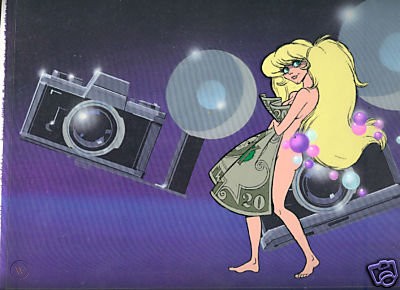
About as cheesecake as it gets
Sitting somewhere between novelty and classic, it’s impossible not to call this a Treasure (especially if you can find a decent copy of it). It’s good as a one-and-done, whilst having the depth needed for a rewatch being worth your time, and the music is a solid, if not very selected, mix. Animation fans will like it, experimental film fans will like it, and its an un-exhausting hour for anyone who just wants to give it a try.
The Raggedyman
 Trash or Treasure